
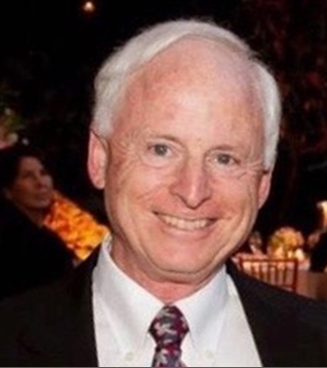
Daniel C. Cherkin is Director of Research with the Osher Center for Integrative Health in the Department of Family Medicine at the University of Washington. He holds a MS in biostatistics and a PhD in Epidemiology from the University of Washington. Throughout his career, his research has focused on identifying more effective strategies for responding to the needs of the many persons with chronic back pain whose pain has not responded to conventional medical treatments, including evaluation of a range of conventional, complementary, and alternative approaches. He recently sat down with colleagues from the Cochrane Complementary Medicine team to talk about his experiences.
Cochrane Complementary Medicine (CAM): We would be interested to get your insights into what you think is important in terms of what's been done in evidence research, particularly as it relates to your own experience; what you think the state of affairs is right now and how that affects practitioners as well as patients; and also future directions. Your perspective on how it fits into the work you've done, and what you think would be useful to consider going forward, is all very relevant.
Dr. Dan Cherkin (DDC): I think there's real value in doing literature reviews and systematic reviews. The value of these reviews, of course, depends on the quality of the original studies being reviewed. There are ways of assessing their quality, which are helpful but don't necessarily get at some key problems, like the choice of control groups.
I think clinicians and people in the general population understandably take these reviews at face value because they don't have the knowledge or sophistication to know where they should be a little more skeptical. It can be especially challenging to interpret the findings of reviews of complementary medicine interventions because there is great variation in how these types of treatments are administered and in the choice of control groups used to evaluate their effectiveness. For example, trials evaluating acupuncture for specific conditions have studied a broad range of different treatments all labeled “acupuncture”. Many of these trials were restricted to the insertion of needles and excluded other interventions commonly used in acupuncture practices, such as moxibustion and herbs. In an attempt to fit into the placebo-controlled drug model of research popular in western medicine, acupuncturists developed clever control interventions (often referred to as “sham acupuncture”) that they assumed were inert. When studies started finding both real and sham acupuncture more effective than usual care but not much different than each other, the profession acknowledged that stimulating points that are not “real” acupuncture points, and superficially stimulating acupuncture points without needle insertion, can have therapeutic effects.
In 2016, these findings that real acupuncture wasn’t clearly better than sham acupuncture led to a reversal in the 2009 National Institute for Health and Care Excellence (NICE) recommendation guidelines in England that had previously recommended acupuncture for chronic low back pain. Recent neuroscience research suggests that stimulating acupuncture points, or even non-acupuncture points on the body, may well have beneficial therapeutic effects for pain conditions. There is clearly a lot we still don’t understand about how “healing” occurs.
I was among the first researchers to evaluate the effectiveness of complementary medicine treatments starting about 35 years ago. My interest was stimulated by my observation that conventional medical treatments weren't being found very effective for chronic low back pain. Our early research found that many patients were dissatisfied with medical care for their back pain, in contrast to high levels of satisfaction among patients of chiropractors. Large numbers of persons with back pain were voting with their feet, seeking care for their pain outside of conventional medicine and often paying out of pocket, because few complementary treatments were covered by insurance. A fair number of people were seeking whatever care they could find to give them hope that they could find a way of living with their pain, even if a cure wasn’t possible.
The major source of funding for clinical trials in the US, the National Institutes of Health (NIH), has focused largely on studies of the efficacy of interventions in highly controlled clinical environments, which has made it difficult to obtain funding for more pragmatic trials. If you believe there is a single identifiable physical cause of a condition and that it can be excised, injected, or treated with a drug, then a reductionistic approach may make sense. But most of what I call healing, in any healthcare system or in traditional healing rituals throughout history, involves a lot more than a specific treatment for a specific problem. It involves recognizing what has been suggested as important for decades: taking a biopsychosocial approach to treating complex chronic conditions. That's particularly true for conditions like pain, which is often non-specific. There's no identifiable lesion in the body that can be corrected through surgery. And we now know that the over-reliance on medications, particularly opioids, has been a total disaster.
I became interested in the complementary medicine treatments that people were trying for back pain but that hadn't been studied, as alternatives to conventional medicine, and I ended up doing a series of randomized trials. I started by exploring and comparing how patients experienced primary medical care and chiropractic care for chronic back pain, and also how physicians and chiropractors felt about taking care of these patients. There were stark differences, physicians were not confident they had much to offer patients and often frustrated trying to help them. Chiropractors were glad to see patients with back pain and confident they could help them. These striking differences in provider beliefs and attitudes were reflected in patients' reports of their experiences. Two-thirds of the patients of chiropractors were very satisfied with their care, versus one-third of physicians’ patients.
Early on I began to think that improving care for chronic low back pain was not just a matter of finding the physical treatment for the physical problem. That shaped my view of what I call healing. Healing is not curing. It's something that physicians and other healers throughout history have done to help reduce patient suffering. A lot of that has to do with listening to their stories, validating their pain, and effectively partnering with them in finding ways to reduce their suffering. I think those things are lost in the biomedical context of health care, which remains dominant and derives from the successes of drugs and the drug model of double-blind, placebo-controlled trials to evaluate treatments.
So, returning to the acupuncture example. Whether or not sham acupuncture is a valid placebo, it has been found helpful for too many patients to dismiss without further thought. In fact, the word "placebo" is a word I try to only use to explain why I don't use it. It has basically come to suggest that a treatment is not real or valid. “It's all in your head, end of discussion." That's not helpful. We now know from neuroscience research that the mind and the body are, if not highly interconnected, part of the same thing. Trying to view them as distinct and separate entities is not helpful.
Distinguishing between placebo and non-placebo effects makes a lot of sense with studies of new drugs that can be dangerous and expensive. You don't want to allow them into the system unless you know they're safe and effective. But acupuncture and a lot of these other treatments have been around for a long time, and are being used by many people without significant harms. I believe the question of greatest importance to both patients and their clinicians is whether a treatment is safe and helps people by reducing their pain and suffering. In my mind, the question isn't whether treatments are better than placebo, but whether they're better than what is currently given to people with those conditions. I have a very practical way of thinking about it.
One of my first NIH grants was for a study of acupuncture for chronic low back pain. It was a large grant, at two sites, with over 600 participants randomized to four groups. NIH made it clear they were not interested in studying acupuncture as commonly practiced as a part of Chinese medicine. They were interested in studying the effect of inserting needles in people. Acupuncture is one part of a broader healing system that includes herbs, moxibustion, and massage, but NIH didn't want any of these components included. I understand their desire to want to reduce the complexity of the trial so that the specific effect of needle insertion could be determined. The downside was that what we studied was not what many acupuncturists do in normal practice.
Nevertheless, we were able to do a very interesting study with four treatment arms. 1) Tailored Acupuncture: insertion of acupuncture needles in points tailored to the individual’s Chinese Medicine diagnosis; 2) Standardized Acupuncture: insertion of needles in points expert acupuncturists considered generally effective for chronic low back pain; 3) Non-Insertive Stimulation of Acupoints: superficial stimulation of the standardized acupoints with toothpicks; and 4) usual care. None of the patients in this trial had ever had acupuncture. Participants in the intervention groups wore blindfolds so they couldn’t see what was happening.
Bottom line: the three “acupuncture” interventions had equivalent effects and all were better than usual care. What can be concluded from this trial? We cannot conclude that acupuncture is a placebo. We learned that stimulating acupoints that acupuncturists considered helpful for back pain improved back-related function, but these benefits were not due to tailoring the treatment to patients’ specific diagnoses or to inserting the needles through the skin. But that doesn't make it placebo. It just means there may be other mechanisms through which stimulation of acupoints works that even the acupuncturists aren't aware of. People got better.
This study shaped my thinking about what helps patients and how healing occurs. When patients and clinicians, ask "Does this treatment work? Does it improve functioning and reduce symptoms and suffering?" The answer in this study was yes, it does.
CAM: Why?
DDC: We don't know yet. That's for other researchers to figure out. Generally, you do the basic science first and then develop a medical intervention to be evaluated in clinical trials. But acupuncture is a healing tradition that has been around in various forms for thousands of years and is being used in large part because conventional medical treatments aren't helpful enough for some conditions.
CAM: Going on from what you've been talking about, my next question would be: what's your perception of how things have changed since you first got involved in this kind of research? How it's perceived, and how it's positioned in relation to conventional medicine. Has that changed, or not? How does it compare to when you first started?
DDC: I started getting into this research around 1990, a few years after the American Chiropractic Association won a major lawsuit against the AMA for calling chiropractors an unscientific cult, and for making it unethical for physicians to refer patients to chiropractors or even for accepting patients referred to them by chiropractors. So, I started when there was still a lot of labeling of “alternative” treatments as unscientific and even quackery.
Things began to change after David Eisenberg published his paper, “Unconventional medicine in the United States” in the New England Journal of Medicine in 1993, which showed that a surprising and growing number of Americans were using a variety of alternative therapies. It was widely read and made it hard to dismiss the reality of this growing trend as fringe quackery. The reaction to the increased use of alternative therapies depended on the philosophy of the physician. Some felt that anything not proven in double-blind, placebo-controlled trials done by people without medical training was unethical, dangerous, and so on. Others, who were a little more broad-minded, thought, well, maybe there's something there, but there's no evidence yet that these treatments are effective.
In fact, when I started studying chronic back pain, there was essentially no useful information to guide primary care physicians in how to care for it. My work tried to fill that gap. Primary care physicians struggled trying to help their patients with chronic pain conditions, most commonly back pain. They weren't trained well to take care of orthopedic problems or pain, and most back pain is non-specific. They couldn’t give patients a clear diagnosis. And if you can’t diagnose it, how can you effectively treat it? X-rays weren't considered very helpful, because you can find all kinds of nasty stuff on X-rays, MRIs, or CT scans in patients who have no pain, and you can find perfectly beautiful spines in patients with severe pain.
So, physicians were stuck and frustrated. Their patients came wanting help and they weren't able to help them. They sometimes told the patients: "You’ll just have to learn to live with it" or "I can't find anything wrong with you," which sounded to many patients like "it's in your head and it is time for you to go away." This mismatch between patients’ needs and what physicians are able to offer their patients continues today, despite extensive research that has identified helpful treatment options.
In the past 30 years there has been an explosion of research evaluating treatments for chronic back pain, particularly in Europe and Australia where national health systems exist. This research has shown that almost anything was better than conventional medical care which emphasized medications. Whether or not the benefits of these complementary treatments were “placebo effects” is a separate issue. If the goal is to help reduce suffering, these treatments were working better and were less harmful than what was normally available. This evidence continues to build, and there are now evidence-based guidelines in many countries that recommend use of complementary therapies for chronic low back pain. In the United States, the American College of Physicians (ACP), the largest medical specialty organization in the world, produces evidence-based guidelines and recommendations on important medical topics. I participated on the expert panel that advised the ACP’s initial guidelines for the diagnosis and treatment of low back pain in 2007. They did an excellent job of conducting systematic reviews that were used to support recommendations for physicians on treating back pain. The 2017 update of these guidelines now recommends 13 different treatments as first-line care for chronic low back pain; none of them are drugs. About half of them are treatments that might be called complementary therapies, such as acupuncture, massage, Mindfulness-Based Stress Reduction, tai chi, yoga, and spinal manipulation.
While the ACP guidelines are an important step toward improving care for chronic back pain, it is not clear that they have led to meaningful improvements in practice. Unless physicians become aware of these guidelines and work in healthcare systems that provide the support necessary to follow the recommendations, care is unlikely to improve. The problem is that we [in the US] don't have a healthcare system. We have a bunch of so-called systems that aren't very systematic or rational, and they're often focused more on the business of medicine than on meeting patients’ needs. Providing care that is truly patient-centered by implementing the best evidence for back pain isn't done very often and/or isn't done effectively. It's one thing for clinicians in these systems to be aware that effective treatments recommended for back pain exist; it's another to be able to connect their patients with them. Physicians don't have the time or energy to figure this out on their own. They don't know a chiropractor or acupuncturist they are comfortable recommending to their patients, or whether such treatments are covered by insurance, and so on. So, we have an irrational and, in many ways, dysfunctional healthcare non-system that does not seem to value highly enough getting patients to treatments that work.
And we’ve seen what happened with opioids. Because of corporate greed, efforts to convince physicians that opioids weren’t highly addictive and assertions that physicians were denying patients the pain relief that opioids could offer, the floodgates to opioids opened. Many primary care physicians were aghast, because they had been trained that these drugs were addictive and should only be used with great caution. It is not hard to understand why opioid use spread like wildfire: medical “experts” were urging physicians to use them, physicians were frustrated because they felt they had nothing to offer their patients with chronic pain, and their patients were frustrated receiving ineffective care. Problem easily solved by writing a script for an opioid. It didn't work out well.
I have tried to take a higher-level view of how health care works and of how evidence has real trouble making it into practice, especially when it's not just swapping one drug for a newer, better drug. Pharmacy data systems can easily be programmed to force doctors to change the drugs they prescribe. But finding ways to make it easy for physicians to provide the best care to their patients for pain conditions would require more support from the healthcare systems than they seem willing or able to provide. A notable exception is the US Department of Veterans’ Affairs (VA), which has adopted a whole-person care approach that incorporates many complementary therapies.
You were asking about the different labels that have been used to describe non-traditional care over time. When I started my career, it was "quackery," then it was "alternative," then "complementary and alternative," then "complementary and integrative medicine," then "complementary and integrative health," and now it's "whole person health." I think each one has been an improvement over the previous one. At least "whole person health" mentions the person, and it is holistic, which I would hope is more supportive of a broader way of thinking about how to help patients. The NIH National Center for Complementary and Integrative Health has spread the word about the value of a whole-person health perspective to the rest of NIH, with apparent initial success. It will be interesting to see how this affects the type of research they fund.
So, a lot of things have changed. But without a more rational healthcare system, meaningful improvements in care for chronic back pain and other conditions that often don’t respond to conventional medical care are unlikely. People who have the money and education and ability to find complementary medicine providers on their own are doing that. People who don't know what's going on and need advice and guidance, and don't have the money or insurance coverage, are stuck.
This is a different topic from Cochrane reviews and the direction they're going in, but to me it's at the essence of where complementary, or integrative, medicine, or whole person health, has gone. I've worked with people in Holland, England, Australia and other places where health care is considered a public right and government-funded. They wanted to know, before implementing a new treatment option, if it is safe and effective. So, they did the research, usually government-funded, to answer a question the government was interested in because they were paying for it and needed to make decisions. Then, if a treatment was found effective (and cost-effective), they would integrate it into the healthcare system. Not so in the US. Other than the VA and maybe the Kaiser integrated healthcare system, implementing evidence into practice has been difficult. So, I've gotten a bit cynical about improving health care in this country without a major change in how care is funded and delivered.
CAM: That leads to my final question. What kinds of things would you like to see change or happen differently, if you were in a position to make that happen, to carry forward some of the things you've talked about in terms of whole-person health, treatment and approach?
DDC: I would like to see health care for all in a nationally funded program in the US. That would make it more likely that treatments found to be effective, and hopefully cost-effective, are implemented and accessible to everybody.
I would like the National Institutes of Health to continue to embrace a whole-person health perspective focusing on what actually matters to and helps patients. Historically, NIH has been primarily a biomedical enterprise that took a reductionistic approach which has worked well for furthering basic science research. This narrow focus may be broadening as the importance of taking a whole person perspective is gaining traction. We're talking about culture change here. It's not just the medical research community and not just the medical practitioner community. Our whole society has an overly simplistic view of what actually helps people get better and suffer less. I hope that taking a more whole person perspective will continue to become more broadly valued, and that it will be supported and reinforced by messages from authorities of various types: government, researchers, physician groups, and so on.
I hope NIH will start funding more research that helps us understand how healing occurs. I would love to see the establishment of a National Institute for Healing Sciences that explicitly focuses on improving understanding of the mechanisms that underlie the healing processes and how health care can be provided in ways that optimize healing in real world settings. I hope that the extensive evidence already in the medical literature showing the therapeutic benefits of "placebos" will lead to real curiosity and research about what is truly therapeutic for patients in pain and how we can create a healthcare system that optimizes healing.
And then build out from there. I'd also hope that medical education changes, based on new understandings of how healing occurs and what's important to the whole person.
Those are the things I'm thinking about, which may be somewhat beyond the scope of what Cochrane does.
CAM: But important to the future of research, whether it's conventional, complementary, or whatever.
Thank you, we appreciate your time. This was really interesting.