
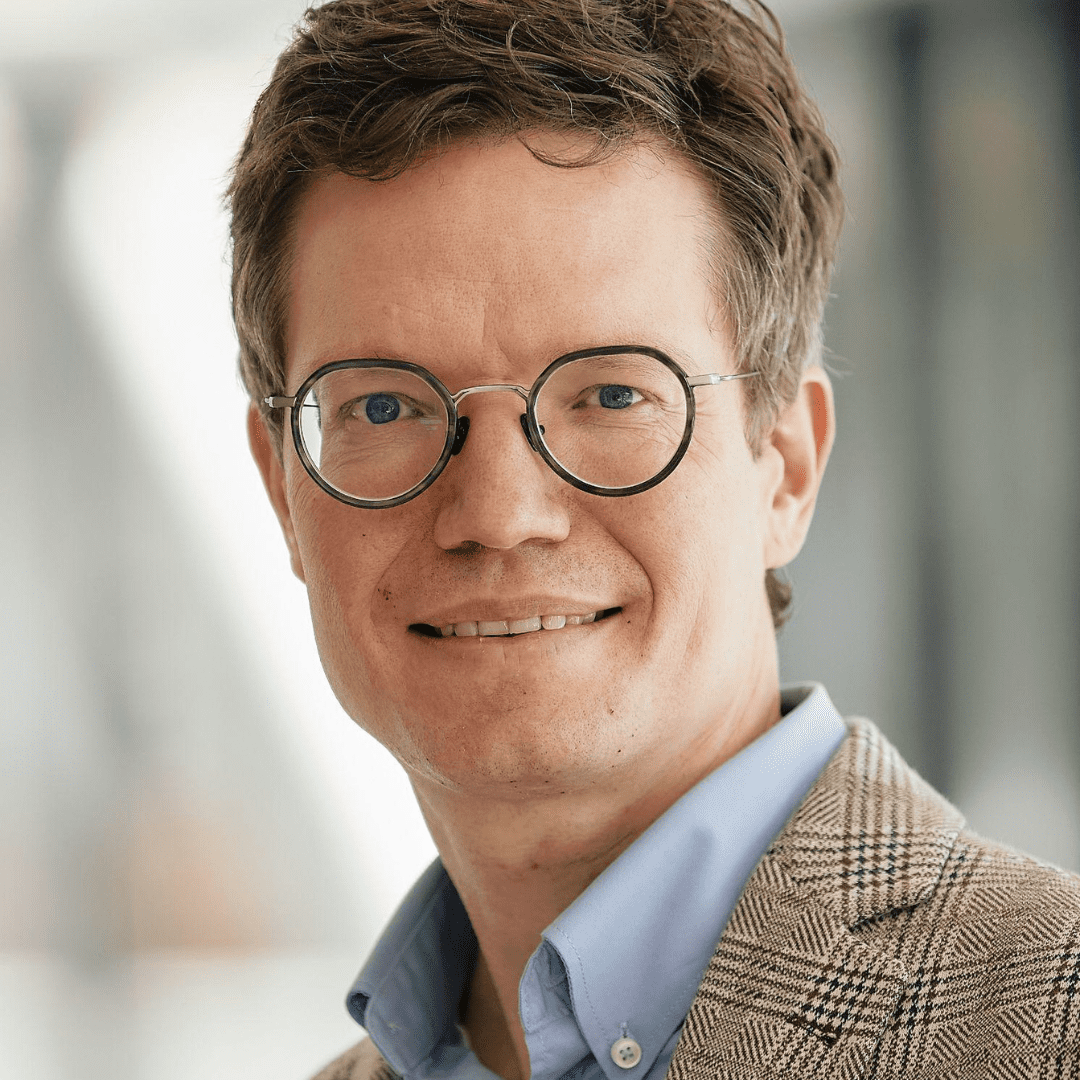
 Prof. Dr. Holger Cramer is Professor of Research in Complementary Medicine at the University of Tübingen, Germany. He is an internationally recognized expert in evidence-based complementary and integrative medicine, with more than 15 years of experience conducting randomized controlled trials, systematic reviews, and methodological research on complex non-pharmacological interventions, including yoga and mind–body therapies. His work focuses on advancing rigorous, patient-centered research methods and improving the translation of evidence into clinical practice and health policy.
Cochrane Complementary Medicine (CAM): Thank you again for participating in our Thought Leaders interview series. To start off, can you tell us a little about your background and training, and what led you to get involved in complementary medicine?
Prof. Dr. Holger Cramer (PHC): I’m currently a professor of research in complementary medicine at the University of Tübingen in Germany. I’ve been working in complementary medicine research for about 15 years. My formal training is in psychology and clinical research, with a strong focus on clinical research methods and evidence evaluation, which has shaped how I approach complementary medicine from the outset. My interest actually started from personal experience—I suffered from chronic neck pain for quite a while. As a student, I randomly visited a yoga class, not expecting it to help my neck pain but simply to reduce the stress of studying. Surprisingly, the neck pain I hadn’t been able to resolve through physiotherapy or other approaches disappeared during yoga. That really got me interested in the topic, and I realized many people use unconventional approaches for health issues, but in Germany these approaches weren’t well integrated into healthcare and, at the time, weren’t extensively researched. For example, there wasn’t a single study on yoga for chronic neck pain. I was studying psychology then, and I realized it would be important to do research in that area. What intrigued me was not so much the individual intervention itself, but the broader question of how such widely used practices could be evaluated rigorously and responsibly within an evidence-based healthcare framework. I joined a research facility focused on complementary medicine—particularly chronic neck pain—and it was a perfect match. I stayed for my PhD, became a postdoc and then research director there, and I never left complementary medicine. Over time, my work has expanded from individual clinical trials to systematic reviews guideline development and evidence synthesis, and questions of implementation and integration into healthcare systems, which continue to be central to my research today.
CAM: That brings us to Cochrane. Cochrane was founded on the idea that systematic reviews and randomized controlled trials [RCTs] are key for effective practice. Can you talk a bit about your experience with that, and how the RCT-focused philosophy of evidence-based medicine aligns with research in complementary medicine?
PHC: The hospital where I received my scientific training in complementary medicine was really focused on randomized controlled trials, so I immediately learned to see RCTs as the important study type. Over time, I realized that, as they currently exist, RCTs can be difficult to adapt for some complementary medicine approaches. I still absolutely believe that RCTs are perhaps the most important cornerstone of evidence-based medicine—especially when interventions are specific and standardized. If you have clear, standardized interventions, RCTs are by far the best method we have.
In complementary medicine, though, many interventions are complex. Even within something like acupuncture, the intervention itself contains complexity; and with multimodal interventions—like inpatient treatments or mind-body programs—the care becomes individualized and broad. Context matters a lot. Many of the variables we try to control in RCTs are actually part of the intervention, so when we control them, we are also controlling away meaningful elements of the treatment.
The standard RCT was optimized for placebo-controlled pharmaceutical research, and it often reaches its limits when applied to complex interventions. That doesn’t mean we should discard RCTs—we have nothing to replace them—but we do need to adapt our methods. Mixed-methods research or pragmatic trials, for example, can be more suited to these types of interventions because they value external validity.
CAM: Let’s move from there to systematic reviews. What has your experience been with systematic reviews in complementary medicine research?
PHC: I personally love systematic reviews—I’m one of the rare people who genuinely enjoy conducting them. They can be incredibly rewarding and offer deep insight. Systematic reviews of RCTs strongly increase rigor, and beyond RCTs, they are the cornerstone of evidence-based medicine. Systematic reviews allow the results of individual and context-dependent RCTs to be systematized and synthesized, thereby providing a more general answer to clinical research questions than individual studies can. We also work on medical guidelines, and there you need high-quality systematic reviews of strong RCTs.
But systematic reviews also have limitations when applied to complex interventions. Cochrane recognizes this—there’s now a chapter on complexity in the Cochrane Handbook. Still, many methodological tools we use are optimized for placebo-controlled pharmaceutical trials. For example, risk-of-bias assessments can disadvantage complex interventions or trials using patient-reported outcomes. And for some approaches, like integrative inpatient medicine, conducting RCTs is extremely difficult—you can’t realistically randomize people to two-week hospital stays in different places. This affects systematic reviews, which then end up with low-quality evidence that may never improve because RCTs simply aren’t feasible.
So we need to think about statistical and methodological approaches to handle the inherent biases of complex interventions. We definitely still need systematic reviews of RCTs, but we also need to be open-minded about adapting them and making sure they’re fair and appropriate for the types of interventions we study. And this isn’t just an issue in complementary medicine—it applies to physiotherapy, psychotherapy, multimodal pain treatment, and surgery. All complex, non-pharmaceutical interventions face similar challenges.
CAM: You mentioned mixed methods as one example. Are there specific methods or processes you think should be more widely incorporated when traditional models aren’t appropriate?
PHC: Yes and no. I don’t see approaches that could replace traditional methods, but I do see approaches that can complement or adapt them. Pragmatic trials are definitely more suited for multimodal interventions than double-blind, placebo-controlled designs. But we don’t have an alternative that could replace RCTs altogether.
For complex interventions, we should complement RCTs and systematic reviews with qualitative studies to understand context—what patients, therapists, and families are experiencing. This isn’t just relevant to complementary medicine; it applies to drug research as well. We also need implementation research so that once we know an intervention is effective and safe, we can understand how to actually implement it in clinical practice. And then we need health services research to understand how interventions are used, how patients experience them, and how they move through different elements of a complex treatment system.
Knowing something is effective in a standardized trial doesn’t tell the whole story. If it’s ineffective or unsafe, that’s straightforward—we stop there. But if it is effective and safe, then we need to know how to best use it, whether it’s cost-effective, and how it can be rewarding for practitioners to deliver.
CAM: That leads to the next question: evidence is only useful if it’s accessed, understood, and used appropriately. From your experience, how is evidence in complementary medicine accessed, understood, and implemented by policymakers, clinicians, patients, and others?
PHC: When I started doing research, I naively thought that once we had the evidence, the world would simply change. Of course, I soon realized that’s not how it works. Complementary medicine is often associated—sometimes incorrectly—with being non-evidence-based. Even when strong evidence exists, people often don’t look it up because they assume complementary medicine can’t be evidence-based.
So it’s extremely important to present evidence in a way that is accessible and digestible. For policymakers, it needs to be easy to find and written with clarity—without overstating the results, but also without so much hedging that the message is lost. Clinicians are often interested but don’t have time to dig deeply into the research. They need medical-language summaries that aren’t overly scientific. The complementary medicine field is working on this, and it’s essential. We can’t do research in an ivory tower that never reaches the people who need it.
CAM: When you think about evidence and complementary medicine, are there topics we haven’t touched on that you think are important?
PHC: Safety is a very important issue that’s often overlooked. There’s a mindset that complementary medicine is gentle or harmless. Sometimes that’s true, but not always—some plants can be potent poisons. Even with acupuncture or yoga, people assume they’re risk-free, but safety is still not reported or assessed often enough. Even systematic reviews often don’t include safety as a secondary outcome. If we want to implement effective interventions, we need solid safety data.
Another important point—although it’s a cliché—is that evidence-based or evidence-informed medicine isn’t just research. It includes patient perspectives and clinical experience. Many people want to use complementary medicine, and we need to take that seriously, involve them in decision-making, and value their perspectives.
Finally, complementary medicine should be evaluated as a complex intervention using appropriate frameworks. And we should recognize that these challenges aren’t unique to complementary medicine—they’re shared across non-pharmacological, multimodal, and complex interventions. Cochrane Complementary Medicine already works with the Cochrane Rehabilitation Thematic Group, which faces many similar issues. We can learn from and support one another, rather than seeing this as a niche concern.