
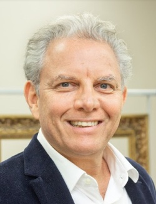
As the Lead of Cochrane Complementary Medicine Brazil, Ricardo Ghelman, MD, PhD, is a physician-academic whose career integrates clinical practice, research, and policy, with more than 30 years as a pediatrician, family doctor, and general practitioner, trained in anthroposophic medicine, pediatric oncology, and hematology. As Collaborating Professor at UFRJ with post-doctoral fellowship in neuroscience from UNIFESP, his expertise spans phytotherapy, integrative pediatrics/oncology, psychoneuroimmunoendocrinology, allergy, pain and health promotion. He is Founder Chair and VP of CABSIN, coordinating the Evidence Maps project with BIREME/PAHO/WHO and the 'Health and Nature' research across 15 Brazilian municipalities with the University of Amsterdam. He also serves as VP of Integrative Pediatrics at Sao Paulo Society of Pediatrics, founder of International Network of Integrative Pediatrics, and Co-Chair of Global Committee and Ambassador for Brazil at SIO. A WHO consultant since 2019 and STAG member, he contributes to benchmarks for training in Chinese and Anthroposophic Medicine, TCIM integration models, member of working group of the WHO Traditional Medicine Strategy 2025–2034, the ICD-11 Traditional Medicine chapter, and represented Latin America at the G20 WHO Global Summit 2023. He is also a member of the Research Council of Anthroposophic Medicine and the ESIM Executive Board, positioning him as a global leader in integrative health.
Cochrane Complementary Medicine (CAM): I'm going to start off by asking if you could tell us a little bit about your background and training, and in particular, what led to your interest and involvement in topics related to complementary medicine.
Professor Dr. Ricardo Ghelman (PRG): Thank you. I graduated in medicine in 1986 from one of the most important and conservative universities in my country, Federal University of Rio de Janeiro. Since my first year in the faculty, I decided to study other forms of medicine, while also being very interested in the basic sciences, like anatomy, biochemistry, and physiology. In the first year, I studied the fundamentals of Chinese medicine; in the second year, homeopathy; and in the third year, anthroposophic medicine. Since the beginning, I've been trying to understand the dialogue between the basic disciplines of the faculty and other medical systems, and I decided to pursue that training in parallel.
I became more focused on anthroposophic medicine because it has a more embedded dialogue with those basic disciplines, like anatomy and biochemistry. But I never liked the alternative medicine model. It was only after I finished my residency in pediatrics that I was able to travel abroad — in 1989, for about 90 days through Europe and the Middle East. During that trip, I visited a University Hospital of Anthroposophic Medicine that had since become a hospital of integrative medicine, in Witten-Herdecke, Germany. It was a University Hospital, and I experienced what felt like an ideal — bringing together technology and humanism. At that time, MRI machines were just being implemented in Brazil, but this hospital — which could have been considered an alternative hospital — had completely merged technology with a complementary approach.
I returned to Brazil certain that my path would be to unite research and clinical experience, and to help build an integrative model. In these 40 years since graduation, I specialized in pediatrics and pediatric hematology and oncology. I consider my journey in complementary medicine a form of intellectual expansion in itself, a kind of deliberate ‘despecialization’ towards a broader humanistic vision and a holistic perspective through anthroposophical and complementary approaches. However, without losing the specialized knowledge in pediatrics and oncology that I acquired.
I completed my master's degree in an area of enormous interest to me — developmental biology and embryology — and undertook training in Goethean science, a phenomenological approach to natural science, in Scotland over two years. I then moved into my PhD project, a preclinical study in pregnant rats evaluating the safety of an anti-cancer herbal medicine — the first PhD on Viscum album (mistletoe) in the country at that time. We created a center of anthroposophic medicine in obstetrics, training residents there at the Federal University of Sao Paulo.
I then pursued a postdoctoral fellowship in neuroscience at the Department of Neurology, where we developed a randomized controlled trial and created a multidisciplinary outpatient clinic for multimodal treatment of chronic pain, with my main approach being anthroposophic medicine. During that same period, I coordinated the first integrative pediatric unit at the University of São Paulo, in a pediatric oncology hospital — the first program on integrative pediatrics in Latin America.
Then, around 2019, as I was concluding those activities — nearly at the start of the pandemic — I felt I had reached a limit in doing research and clinical practice alone or in small groups. I wanted to work toward social impact, and specifically toward implementing an academic consortium inspired by those in the US. Since 2018, over these last eight years, my life has changed radically. When we established our academic consortium, I was invited to advise the WHO in the field of traditional, complementary, and integrative medicine, contributing to the development and review of WHO documents including training benchmarks (Traditional Chinese Medicine, Anthroposophic Medicine) and models for assessing the level of integration of traditional and complementary medicine within health systems. In the last two years I coordinated the Brazilian group for the development of the traditional medicine chapter of ICD-11 (WHO ICD-11 TM2 Brazil), with a focus on Ayurveda, became a member of the Topic Group on Artificial Intelligence in Traditional Medicine (GTMC/WHO) and last year a member of the STAG — Strategic Technical Advisory Group of the WHO Global Centre for Traditional Medicine — a body of 19 experts responsible for overseeing the implementation of the Global Strategy 2025–2034.
Until then, my international connections had been mainly in the field of anthroposophic medicine in Switzerland since 2015. But after founding the Brazilian Academic Consortium — the second worldwide, as the Netherlands created the third just a few months later, and Germany is now creating the fourth — we received a major mission from the Ministry of Health in 2019: to promote evidence for the national policy on complementary medicine. We launched a large project called the Evidence Maps on Clinical Effectiveness of Complementary Medicine, in partnership with the Latin American and Caribbean Center on Health Sciences Information of Pan American Health Organization (BIREME/PAHO). I consider this one of the biggest projects of the last seven years engaging around 100 researchers from specific fields on complementary medicine.
Around the same time, the Pediatric Society of São Paulo, representing around 5,000 pediatricians, invited me to create a Department of Integrative Pediatrics within the Society. That invitation grew out of an International Symposium where we brought together leaders from ten countries in the field of integrative pediatrics. From that movement, and most recently at the second World Congress of Traditional Complementary and Integrative Medicine in Rio, we created the International Network of Integrative Pediatrics (INIP), mobilizing this global movement, which unites approximately 18 countries.
In 2023, I was invited to become a collaborating professor in the Department of Medicine on Primary Health Care at the Faculty of Medicine of the Federal University of Rio de Janeiro, the university where I graduated. There, I am responsible for promoting education, training, and dissemination of knowledge in the field of complementary medicine, working alongside a fantastic team of professors in this area. We also offer an elective course for medical and master's students. I also became co-chair of the global committee of the Society for Integrative Oncology, where I previously served only as an ambassador for Brazil. Following the World Congress of Traditional, Complementary and Integrative Medicine, which I had the honor to serve as chairman over in October 2025 in Rio de Janeiro, organized by the Brazilian Academic Consortium (CABSIN), the International Society for Research in the field (ISCMR), and the European Society for Integrative Medicine (ESIM), we brought together 1200 people from 70 countries. Currently, as a guest member of the ESIM board, we are co-organizing the next European Congress, which will be held in Turkey in December, and we will be holding an international network meeting on integrative pediatrics and oncology. After the world congress, I have been more actively involved in cooperation with the Ministry of Health, which has been better structuring this area in Brazil, expanding services within the public health system. Susan Wieland, with whom I have been cooperating for some years through the WHO, invited me to lead this new initiative with CABSIN to establish Cochrane Complementary Medicine Brazil, a source of great happiness, in dialogue with my peers in China, Korea, Germany, and the USA.
This is my overall view. I know it's long—but it's four decades dedicated to this topic of complementary medicine.
CAM: Can you tell me about your experience as someone interested in complementary and integrative medicine — particularly around producing evidence? How has that research been received in the areas of medicine where you work?
PRG: As I mentioned, I don't believe in the path of alternative medicine. I very much value the proposal of integration — of incorporating complementary approaches based on evidence into regular, conventional practice. From my perspective, what is most intelligent in the field of complementary medicine is connecting with the evidence and combining approaches, not substituting them. I realized in 1989, during my travels in Europe, that to develop that path, I needed to do research. Without evidence and research, it remains more in the realm of belief. My personal position is that I don't believe in complementary medicine — I know what is effective based on evidence. Some areas are not effective, and some are not even safe; others are both safe and effective. To be honest, some areas are more driven by political activity from small groups.
Due to the great heterogeneity of the field, I conceive of complementary medicine in three main areas. The first encompasses complete medical systems—such as Chinese medicine, Ayurveda, and anthroposophic medicine—which possess their own pathophysiology, diagnosis, and multimodal treatment, as well as a comprehensive vision developed historically in specific countries and disseminated from there. The second area comprises natural products, which require quality-controlled studies and randomized clinical trials, just like any pharmacological approach. The third encompasses non-pharmacological approaches—yoga, meditation, and what in the US is often called mind-body therapies, although I personally consider this term accurate, as it implies that other areas are not also mind-body. Each of these three areas requires distinct research approaches. But one thing is certain: research opens doors. In my experience, research becomes part of the implementation strategy, incorporating new visions and methodologies. It's like entering societies and health systems through the front door.
CAM: That leads to my next question: when research is done, it's important to actually get it to people who can access, understand, and use it. What has your experience been in terms of disseminating research information? What do you think is working well, and what could be done better?
PRG: If you don't mind, I'd like to come back briefly to the previous question and say a little more about research methods, as it connects to the dissemination question.
I consider RCTs and systematic reviews to still be the gold standard for evidence-based practice, but there are limitations. The standard RCT was optimized for placebo-controlled pharmaceutical research and often reaches its limits when applied to complex interventions. Pragmatic trials may be more suitable for multimodal interventions, because in the real world complementary medicine typically doesn't involve a single modality but multiple ones. It's also very difficult to blind several interventions simultaneously.
Another challenge is the sheer volume of studies — randomized trials and systematic reviews. Over the past 25 years, we've seen an exponential increase in publication. To promote evidence-informed public policy and practice, we need evidence maps that compare and synthesize systematic reviews, because it is now impossible for any individual to keep up with so many. The strategy we adopted at our Brazilian Consortium was to produce evidence map series. We've now brought together around 2,700 systematic reviews from 31 evidence maps. One limitation we've found is that some systematic reviews repeat the same primary data — the same RCTs — so we now need to extract data more carefully to avoid duplication. We also use AMSTAR to evaluate the quality of the systematic reviews, and in some areas the quality of reviews is very low, even when the underlying RCTs are of reasonable quality.
For non-pharmacological and complex interventions — such as yoga — blinding is impossible, and comparative designs with conventional medicine can be problematic. The more meaningful design, I think, is to compare arm A alone with arms A plus B, rather than comparing A and B directly. It makes no sense to compare music therapy with chemotherapy, for instance — that's a question journalists sometimes pose, as if you have to choose. The real question is whether it makes sense to add a complementary approach based on evidence.
On dissemination specifically: I believe we need to move further toward creating guidelines that can be adapted and translated into multiple languages, with support from local societies and governments. A very good example comes from oncology, where the Society of Integrative Oncology, together with ASCO, created the SIO-ASCO guidelines, which opened the door for conventional oncologists who had previously kept that knowledge in silos.
I also think platforms like the Virtual Health Library from PAHO have opened doors in Latin America, and the evidence map commissioned by the WHO Global Center in South Korea has opened doors in Asia and worldwide. Most recently, the WHO launched the Global Library of Traditional Medicine, which gathers around 1.6 million publications from PubMed and Medline. These platforms are very important — but they need to be paired with innovation: entering universities, reaching faculty training, social media, and major communication channels. Knowledge translation is now, I believe, more important than simply doing more research. We have enormous duplications of RCTs in complementary medicine, but the work is not well known. There is this impressive amount of publications in this WHO global library — but almost no one knows it exists; we need to spread this bombshell news.
An innovative way to disseminate knowledge is when we adopt a bilingual presentation format, not in the sense of language, but in writing style, such as using lay language for family members and, on another page, using more scientific language. During the pandemic, I coordinated a book on complementary medicine for COVID-19 care, simulating a nurse's day in primary care in the morning and in the hospital in the afternoon, applying various complementary modalities. The innovation was that each page of this e-book led to another page about evidence and sources of information. Unfortunately, it only exists in Portuguese and was commissioned by the Federal Nursing Council.
A current example: I just returned recently from a research project I'm coordinating on nature-based interventions. This approach started in Japan in the 80's with what they called "Forest Bathing" — research showing that multisensory experiences in nature can reduce blood pressure and anxiety. Now, the Secretary of Environment of the Brazilian state of Goiás asked whether we could develop a research project that could be offered to the state to support mental health. We gathered 296 systematic reviews on nature-based interventions, presented at COP30, and through that process engaged 15 cities to offer this to patients. We are now in the second step: training providers from both the environment and health departments and collecting quantitative and qualitative data from the patients in the real world. It is an innovative method that starts with mapping evidence, extracts a set of methodologies applied in primary studies to define the best mixed-methods approach, develops a clinical trial, and applies it in the field, scaling the intervention through multipliers and including the creation of a documentary that records the process and real-life experiences.
Another challenge is including research into the study of ancestral indigenous and African medicines, which preserve rituals. With our scientific lens trained to see molecules and seek specific answers by measuring the effect of specific interventions on specific outcomes, entering this universe of ancestral medicine is like trying to describe and understand a new planet through a telescope or microscope. This is where the challenge of the complexity of these complex medical systems comes in, whether traditional to indigenous peoples or more recent complementary approaches. In this case, we need a team of scientists united in a transdisciplinary way, integrating anthropology and pharmacology.
We therefore face the challenge of complexity: how to avoid a reductionist approach to complementary medicine. Entire medical systems have their own ways of thinking about pathophysiology, diagnosis, and treatment. If you apply randomized controlled trials (RCTs) within a purely conventional framework, without considering, for example, constitutional diagnosis—which, incidentally, will be included in ICD-11 in 2027 in several countries—you risk oversimplifying. Lower back pain appears the same from a conventional perspective, but from a Chinese, Ayurvedic, or anthroposophical perspective, it may represent very different constitutional patterns, that is, the same symptom in different contexts. Of course, there is practical value in the reductionist approach—you can, for example, compare St. John's wort (Hypericum perforatum) to fluoxetine as an antidepressant and check for synergy or antagonism, a fundamental question in oncology to verify how we can truly integrate therapeutic models synergistically into prescriptions. But we need to advance the study of complementary approaches and seek markers or indicators of these observable patterns that can be identified in a few minutes by a doctor or healthcare professional trained in these approaches. A beautiful example is the Ayurgenomics program, which mapped markers of traditional diagnostic patterns in the Indian population. This broader perspective can also offer a more nuanced understanding of depression—different patterns, different responses, as was adopted by ancient Greek medicine. The challenge is to balance protocol-based research with preserving the complexity of these medical systems and raising new questions.
CAM: What's your view on the terminology used in this field — alternative, complementary, integrative — and which do you think is most valuable today?
PRG: I think we need to stress the difference between alternative and complementary medicine. One easy way to define them: alternative means "or" — one or the other — while complementary means "and" — both together. When we talk about applying new approaches, whether non-pharmacological or natural products, based on safety and efficacy, as a complementary approach that can be integrated into healthcare systems, that framing matters enormously.
The WHO's evolving concept of integration — integration into healthcare systems — is, I think, very well conceived. It encompasses traditional use, research-based modalities, and new approaches, all with that integrative proposal. The NIH's decision to rename the National Center of Complementary and Alternative Medicine to the National Center for Complementary and Integrative Health was an important statement — it signals that we are talking about health and integration, not just disease and symptoms.
That said, to be honest, there are areas where we should be grateful we have corticosteroids and surgery. This is not an advocacy against conventional medicine. The goal is to transform the best of complementary medicine into integrated practice, and to focus on the gaps where conventional treatment has fallen short. The two greatest challenges for both conventional and complementary medicine today are mental health and chronic non-communicable diseases, both of which have been rising in incidence over the last 25 years. And at the same time, in that same period, we have seen that exponential growth in publication from bibliometric studies in complementary medicine — which suggests a real opportunity to ask: can we help fill that gap?
CAM: Thank you — that was very interesting and enlightening, and I appreciate your time and perspectives very much.
PRG: Just a final word — I'd like to thank you very much for the invitation to become part of the Cochrane Complementary Medicine Field. I believe that through cooperation across our regions of the world, if we follow that path, we can go further. Thank you very much.