
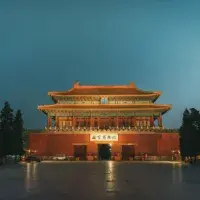
From October 19 to 20, 7th Beijing Forum of Evidence-Based Medicine & 2026 Academic Symposium of eCMTA Journal was held at Beijing University of Chinese Medicine (Beijing, China). Twenty-eight experts and scholars from 14 countries and regions, including the Chinese mainland, Hong Kong, Macao, and Taiwan, as well as Canada, the United Kingdom, the United States, Australia, and Norway, attended the event. They held in-depth exchanges on topics such as the development of evidence-based medicine (EBM), clinical research on traditional Chinese medicine (TCM), the application of artificial intelligence, and international cooperation in traditional medicine, and discussed how to promote the high-quality development of TCM with more reliable scientific evidence.
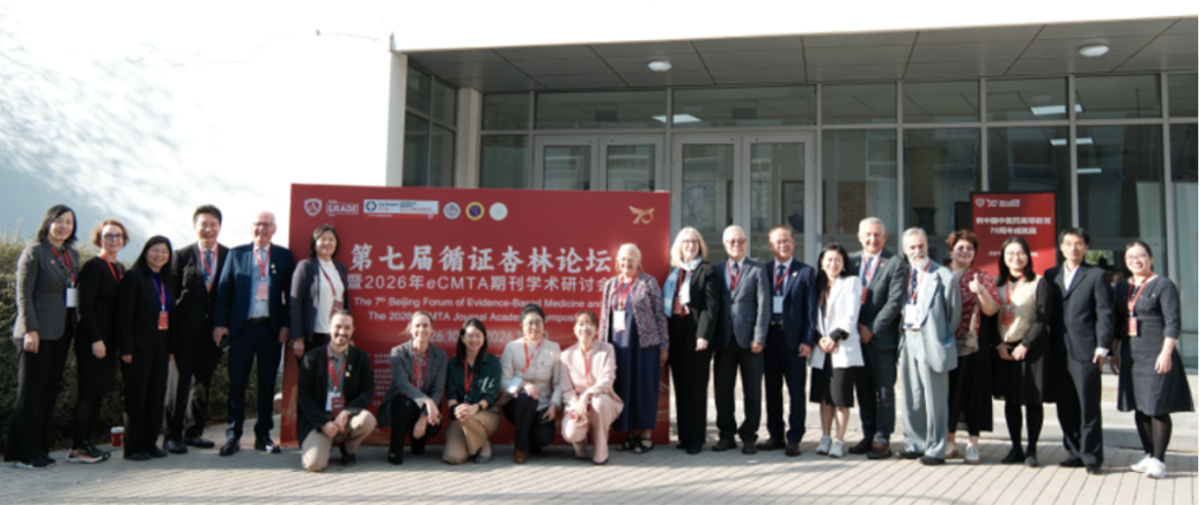
The forum was jointly hosted by the Center for Evidence-Based Medicine and the Periodical Center of Beijing University of Chinese Medicine, and organized by the Institute for Excellence in Evidence-Based Chinese Medicine, the Cochrane China Network member unit, and the Beijing GRADE Center, among others. Prof. Jianping Liu, Executive Dean of the Institute for Excellence in Evidence-Based Chinese Medicine, and Prof. Yutong Fei, Vice Dean of the School of Traditional Chinese Medicine, served as co-chairs of the conference. Prof. Cunzhi Liu, Vice President of Beijing University of Chinese Medicine, and Prof. Yanshu Pan, Director of the Periodical Center, delivered opening remarks. Participants included Prof. Gordon Guyatt (McMaster University, Canada), one of the founders of EBM and a Fellow of the Royal Society of Canada; Prof. Nicola Robinson (London South Bank University, UK); Prof. Lixing Lao (Virginia University of Integrative Medicine, USA); Prof. Dennis Chang and Prof. Alan Bensoussan (Western Sydney University, Australia); and experts and scholars including L. Susan Wieland, Terje Alræk, Merlin Willcox, Trine Stub, Feng Xie, and Bishan Liu.
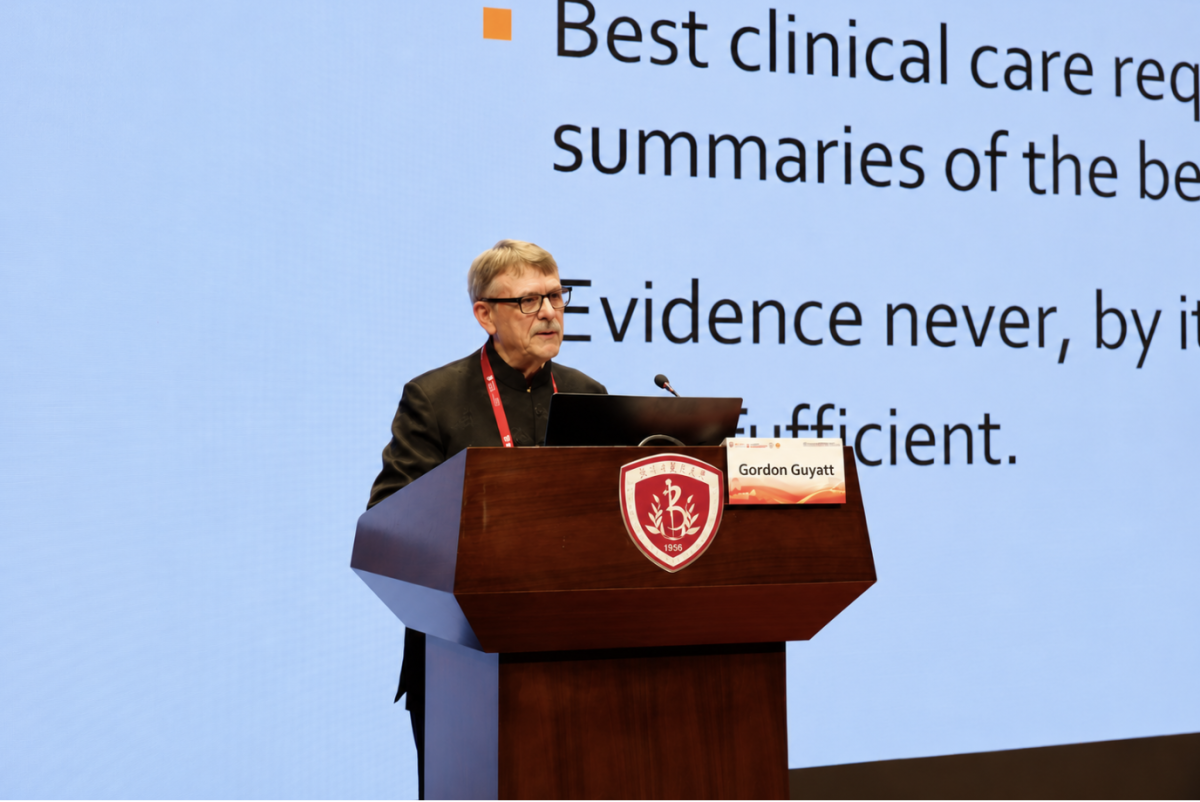
EBM emphasizes that medical decisions should integrate clinicians’ clinical experience, draw fully on reliable scientific research evidence, and take into account patients’ actual needs and personal preferences. Prof. Gordon Guyatt delivered a keynote address titled “The Future of Evidence-Based Medicine,” noting that the reliability of evidence varies across studies and that high-quality decision-making requires rigorous appraisal and systematic synthesis of available evidence, while fully considering patients’ values and preferences. In a talk titled “What Counts as Evidence?”, Prof. Nicola Robinson pointed out that whether a therapy is trustworthy cannot be judged solely on isolated success cases or personal impressions; it requires scientific and rigorous research to understand its real effects and potential risks.
The forum also included a young scholars’ exchange session. Young researchers from Beijing University of Chinese Medicine and other institutions shared their findings on clinical research in TCM, evidence evaluation, the efficacy of acupuncture, and the development of clinical practice guidelines. Prof. Jianping Liu and other experts commented on each presentation, helping to cultivate young talent.
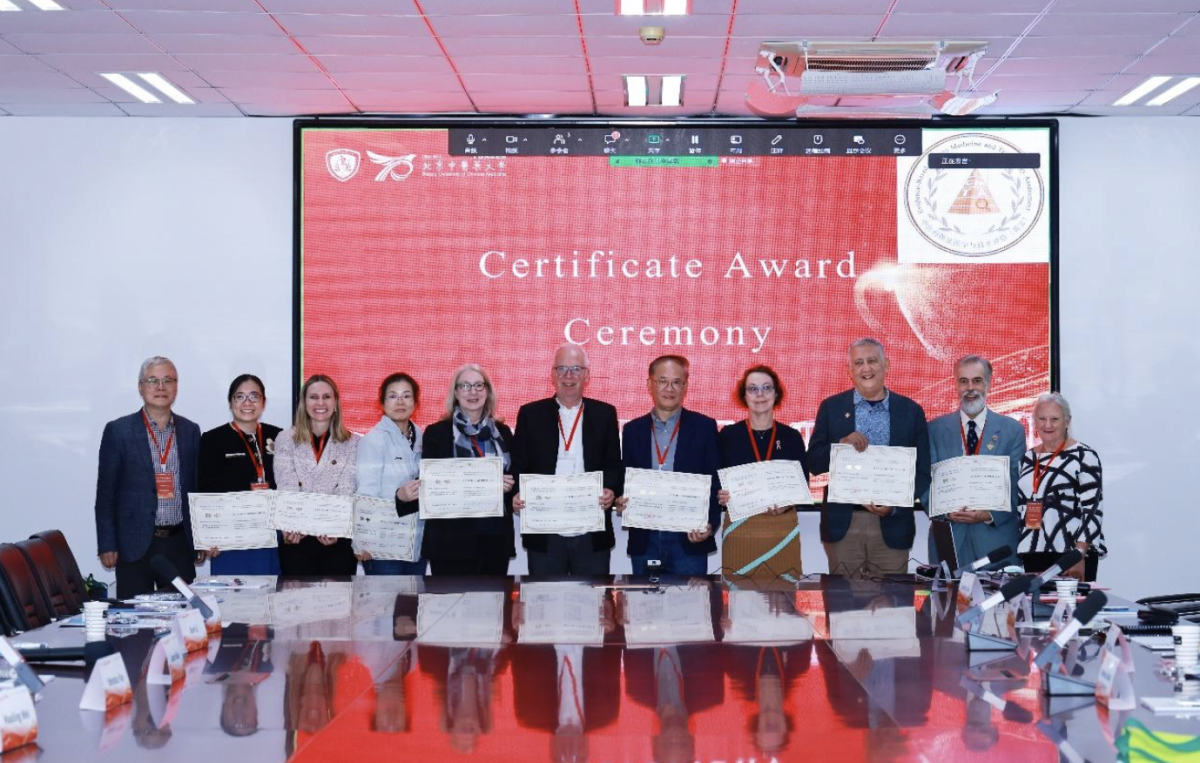
The 2026 Academic Symposium of eCMTA Journal was held concurrently. Representatives from Tsinghua University Press Co., Ltd. and Chinese and international editorial board members gathered online and offline to discuss the journal’s high-quality development. Co-Editor-in-Chief Prof. Jianping Liu introduced the participants, and Director Yanshu Pan delivered a welcome address, affirming the journal’s initial achievements since its launch more than a year ago in internationalization, database indexing and academic influence. Appointment letters were presented to editorial board members attending in person. Co-Editor-in-Chief Prof. Nicola Robinson reported on the journal’s progress. Participants held in-depth discussions on special topic planning for Volume 3, Issues 2 and 4; adjustments to column settings; the rights and responsibilities of editorial board members; the addition of young editorial board members; and ways to enhance the journal’s international influence.
The ultimate goal of medical research is to ensure that scientific discoveries truly benefit patients. This forum provided a platform for exchange and cooperation among experts at home and abroad, and created an opportunity to promote the integration of clinical research on TCM with international evidence-based medicine methods. Continued efforts to strengthen high-quality research, promote evidence translation and deepen international cooperation are expected to lead to a more scientific understanding of the clinical value of TCM and better serve public health.